Image not available
Lighting & electrical
HighQuality Grounding Electrode China Factory and Leading Suppliers
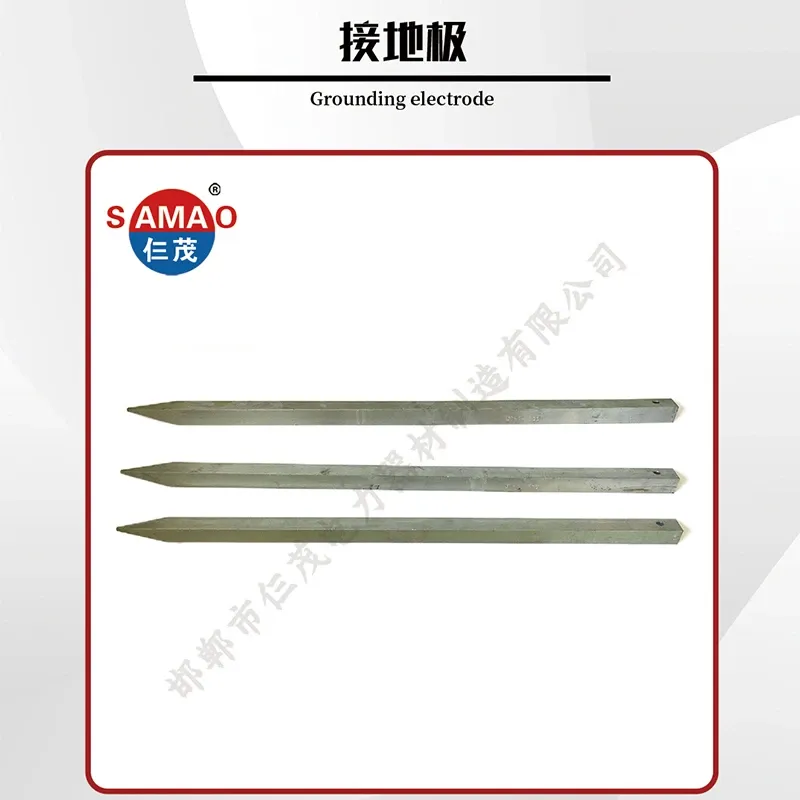
Leading China factory and suppliers of high-performance grounding electrodes. Our systems feature 2.5M galvanized angle steels installed in 800mm deep trenches to ensure low-resistance electrical connections and maximum lightning protection safety.
SupplierHandan Samao Electric Power Equipment ManufacturingCo., LTD.www.samaoep.com
Source categories
About this product
Product information from the supplier.
A Grounding Electrode, often referred to as a grounding body, is a critical metal conductor or system of conductors designed to establish a direct, low-resistance electrical connection with the earth. As the foundational element of any lightning protection system, it ensures that high-voltage surges from lightning strikes, electrostatic induction, and electromagnetic interference are safely dispersed into the soil, preventing catastrophic equipment failure and structural damage.
Effective grounding design is highly dependent on geological variables. Factors such as soil resistivity, moisture content, and soil layer distribution dictate the optimal shape, size, and material selection of the grounding grid. By implementing precision-engineered artificial grounding electrodes tailored to specific site conditions, industries can establish a stable protective grounding system that minimizes contact voltage and eliminates the risk of electric shock to personnel.
Detailed Parameters
| Electrode Type | Artificial & Natural Grounding | Primary Function | Lightning Energy Dispersion |
|---|---|---|---|
| Material Composition | High-Conductivity Metals | Connection Interface | Direct Soil Contact |
| Key Design Factors | Soil Resistivity & Structure | Environmental Influence | Moisture Content & Geology |
| Safety Objective | Reduction of Ground Voltage | Protection Target | Non-electrified Metal Parts |
| Application Scope | Lightning Protection Systems | Compliance Goal | Electrical Safety Standards |
Key Advantages
Enhanced Safety
Effectively reduces contact voltage to prevent electric shock risks for human operators.
Long-term Stability
Designed to withstand soil corrosion and maintain conductivity over extended lifecycles.
Rapid Dispersion
Quickly releases lightning currents into the earth to protect sensitive electrical equipment.
EMC Protection
Mitigates electromagnetic induction and wave invasion for cleaner signal integrity.
Geological Adaptation
Customizable designs based on soil resistivity and moisture for maximum efficiency.
Standard Compliance
Fully aligns with international lightning protection and electrical grounding codes.
Product Gallery
Management Platforms
Inventory Control
Real-time tracking of grounding components and alloy stock levels.
Design Optimization
Advanced modeling based on soil resistivity data for precise electrode sizing.
Maintenance Alerts
Scheduled inspections to ensure grounding resistance remains within safety limits.
Compliance Monitoring
Automated verification of installation against industry safety standards.
Logistics Suite
Streamlined shipping and delivery for large-scale grounding grid projects.
Quality Assurance
Rigorous material testing to guarantee conductivity and corrosion resistance.
Investment Return Comparison
| Feature | Standard Grounding | Premium Engineered Electrode |
|---|---|---|
| Initial Cost | Low | Moderate |
| Installation Lifespan | Short/Medium | Long-term High Durability |
| Risk of Equipment Failure | Moderate | Extremely Low |
| Maintenance Frequency | High | Low/Predictive |
| Safety Reliability | Basic | Advanced/Certified |
Frequently Asked Questions
Q: What is the primary difference between artificial and natural grounding electrodes?
Natural grounding electrodes utilize existing metallic structures (like building foundations), while artificial electrodes are intentionally installed conductors designed to achieve a specific resistance value.
Q: Why is soil resistivity critical for grounding electrode design?
Soil resistivity determines how easily electrical current flows into the earth. High resistivity requires larger or more complex electrode configurations to ensure the system can safely disperse lightning energy.
Q: How does a grounding electrode prevent electric shock?
By creating a low-resistance path to the earth, it reduces the potential voltage on non-electrified metal parts of equipment, ensuring that current flows to the ground rather than through a human body.
Q: Can grounding electrodes protect against electromagnetic induction?
Yes, a professional grounding system provides a stable reference potential that helps dissipate induced currents and protects electronic components from interference.
Q: What materials are best for grounding electrodes in corrosive soils?
Materials with high corrosion resistance, such as specialized copper-bonded steel or stainless steel, are recommended to maintain long-term electrical connectivity.
Q: Is a grounding electrode enough for complete lightning protection?
It is the most important link, but it must be part of a complete system including air terminals (lightning rods) and down conductors to be fully effective.
Secure Your Infrastructure with Professional Grounding Solutions
Contact UsMore from this supplier
Handan Samao Electric Power Equipment ManufacturingCo., LTD.