
Image not available

New energy
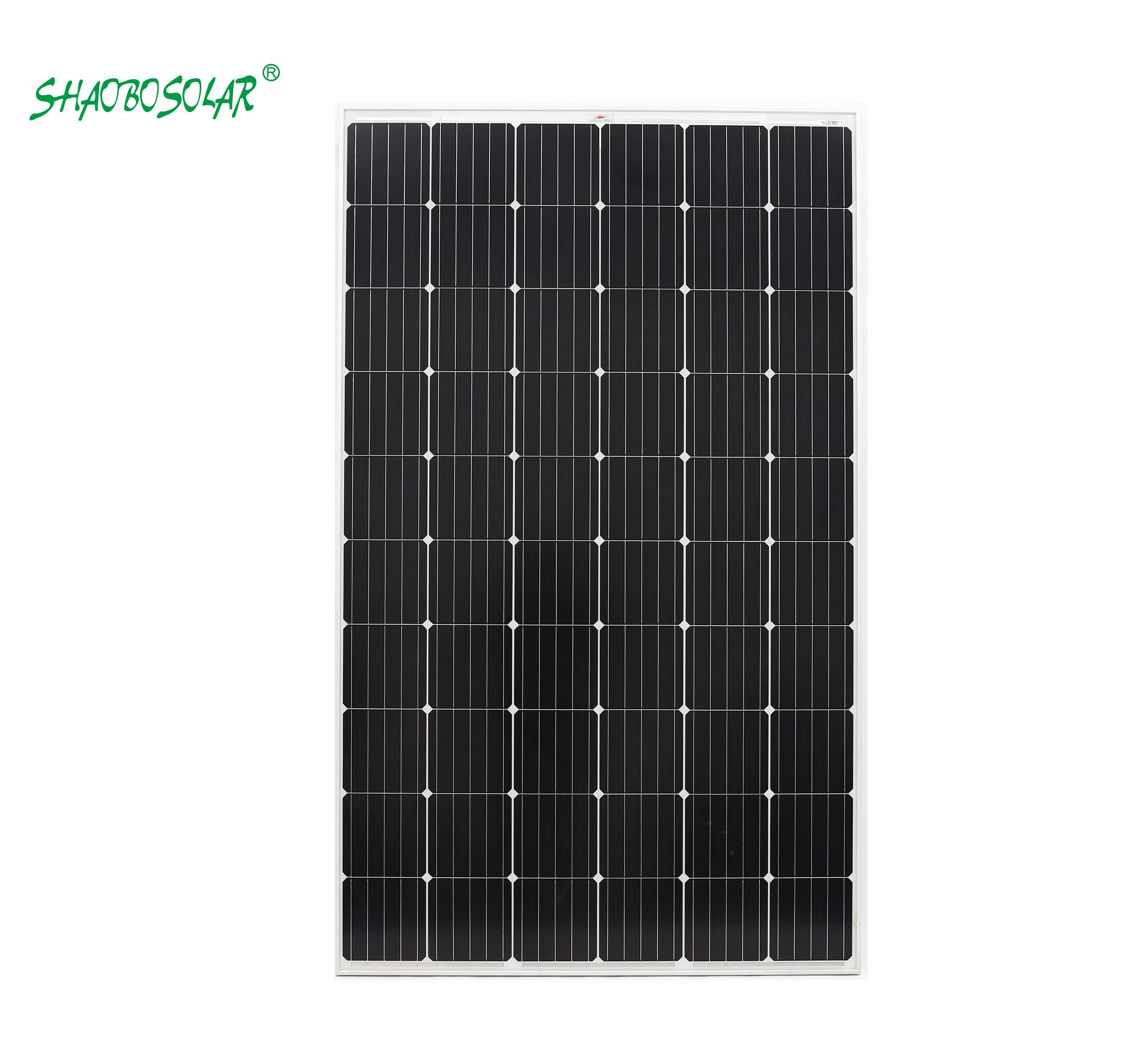
High Efficiency 320W Monocrystalline Solar PV Module China Factory Suppliers
Looking for reliable China suppliers? Our factory provides high-efficiency 320W Monocrystalline Solar PV Modules (Model SBM6-60-320). Featuring 9bb technology for maximum energy harvest. MOQ 140 HQ, shipping from Qingdao or Tianjin. Fast delivery within 15 days. Contact Shaobosolar for premium solar solutions.
SupplierHeBei ShaoBo Photovoltaic Technology Co., Ltd.www.shaobosolar.com
Source categories
About this product
Product information from the supplier.
Experience high-efficiency energy conversion with our premium Monocrystalline Solar PV Module. Engineered with advanced 60-cell technology and optimized busbar configurations (5bb/9bb), this module delivers a powerful peak output of up to 320W, making it an ideal choice for residential and commercial solar system installations seeking maximum reliability and performance.
Designed to withstand harsh environmental conditions, this solar panel combines high-transmittance tempered glass with a robust aluminium-alloy frame. Whether integrated into a large-scale solar array or a standalone off-grid system, our modules ensure stable power generation and long-term durability, significantly reducing your carbon footprint while lowering energy costs.
Detailed Parameters
| Peak Power (Pmax) | 320W | Max Power Voltage (Vmp) | 31.9V |
|---|---|---|---|
| Max Power Current (Imp) | 10.06A | Open Circuit Voltage (Voc) | 38.16V |
| Short Circuit Current (Isc) | 10.86A | Max System Voltage | 1500V |
| Module Dimensions | 165099235mm | Module Weight | 18.8KG |
| Solar Cell Type | 60 Cells Mono-crystalline | Glass Type | 3.2mm Tempered Glass |
Key Advantages
Superior Durability
Features a heavy-duty aluminium alloy frame and 3.2mm tempered glass to resist mechanical stress.
Long-Term Stability
High-quality monocrystalline cells ensure consistent power output over the product's lifespan.
High Efficiency
Optimized 5bb/9bb busbar design minimizes internal resistance for maximum energy harvest.
Extreme Weather Resistance
Certified to withstand hail speeds of 23m/s and maximum loads of 5400Pa.
High Transparency
Low-iron high-transmittance glass allows more sunlight to reach the cells for better conversion.
Easy Installation
Equipped with standard MC4 connectors and high-quality copper cabling for rapid deployment.
Product Gallery


Management Platforms
Inventory Tracking
Real-time monitoring of solar module stock levels and batch traceability.
Performance Analysis
Detailed analytics on energy conversion efficiency and peak power yields.
Maintenance Alerts
Automated notifications for panel cleaning and system health checks.
Voltage Monitoring
Continuous tracking of Voc and Vmp to ensure system stability.
Logistics Coordination
Streamlined shipping and delivery management for large PV projects.
Quality Control
Digital documentation of DC withstand and hail test certifications.
Investment Return Comparison
| Metric | Standard Polycrystalline | Our Mono-crystalline |
|---|---|---|
| Conversion Efficiency | Lower | Significantly Higher |
| Space Requirement | High Area Needed | Compact Footprint |
| Low-Light Performance | Average | Excellent |
| Long-term ROI | Slow Return | Accelerated Return |
| Life Cycle Value | Moderate | Premium Value |
Frequently Asked Questions
Q: What is the difference between Mono and Polycrystalline panels?
Monocrystalline panels, like our 320W module, are made from a single crystal structure, offering higher efficiency and better performance in low-light conditions compared to polycrystalline panels.
Q: How does the 9bb technology improve performance?
The 9bb (9 Busbars) technology reduces the distance electrons travel, minimizing internal resistance and increasing the overall efficiency of the solar cell.
Q: Can these modules withstand heavy snow or wind?
Yes, our panels are tested to withstand a maximum load of 5400Pa and feature tempered glass designed to resist hail and high wind pressure.
Q: What is the maximum system voltage for these modules?
The maximum system voltage for the SBM6-60-320 model is 1500V, making it suitable for both small-scale and utility-scale power plants.
Q: Are MC4 connectors included with the panels?
Yes, each module comes pre-equipped with standard MC4 plug types and 900mm copper cables for seamless connection.
Q: How does temperature affect the power output?
Like all solar cells, performance varies with temperature. Our modules are engineered with a professional temperature coefficient to maintain stability between -40°C and +85°C.
Ready to Upgrade Your Energy System with High-Efficiency Solar Modules?
Contact UsMore from this supplier
HeBei ShaoBo Photovoltaic Technology Co., Ltd.


