
Image not available

Metals & minerals
aluminum weld neck flanges for industrial piping systems | Factory
<p>For corrosion-sensitive, weight-critical, and high-vibration piping networks, aluminum weld neck flanges deliver a leak-tight, structurally continuous joint. This guide helps purchasing managers, technical directors, and operations leaders evaluate ANSI/ASME, DIN, and JIS aluminum weld neck flange dimensions, alloys (5083, 6061, 7075), pressure ratings, and factory-direct cost advantages — bac…
SupplierCangzhou Weihuan Pipeline Equipment Co.,Ltd.www.weihuantube.com
Source categories
About this product
Product information from the supplier.
✅ ANSI B16.5 · DIN · JIS · EN 1092 Compliant
Aluminum Weld Neck Flanges for Industrial Piping Systems: Factory-Direct Sourcing, Precision Machining & Full Traceability
For corrosion-sensitive, weight-critical, and high-vibration piping networks, aluminum weld neck flanges deliver a leak-tight, structurally continuous joint. This guide helps purchasing managers, technical directors, and operations leaders evaluate ANSI/ASME, DIN, and JIS aluminum weld neck flange dimensions, alloys (5083, 6061, 7075), pressure ratings, and factory-direct cost advantages — backed by real test data and 20+ export markets.
📩 Get a Factory Quote in 24 Hours 📞 WhatsApp: +86 18531701777
20+
Export Countries
15,000+
Tons Shipped Annually
100%
Dimensional / Pressure Test
≤35
Day Delivery Window
📑 Table of Contents
1. The Costly Reality of Substandard Flanges2. Why Aluminum Weld Neck Flanges?3. Technical Specification & Alloy Selection4. Dimensions, Tolerances & Pressure Ratings5. Applications & Real-World Case Studies6. Factory-Direct Manufacturing Advantage7. Quality Assurance & International Certification8. Customer Reviews & Verified Testimonials9. FAQ for Procurement Teams10. Author & Factory Background11. Direct Contact & Quote Request
⚠️ The Costly Reality of Substandard Flanges in Industrial Piping
Buying flanges is rarely the most exciting line item on a BOM — but it is one of the most safety-critical and budget-critical decisions you will make. Here is what we hear from procurement and engineering teams who came to us after cutting corners elsewhere:
💸 High price on non-ferrous flanges
Stainless steel and nickel-alloy flanges can account for up to 30–40% of total piping material cost. Aluminum offers equal corrosion protection at a fraction of the weight and cost — but only if you source from a factory with vertical control over casting, forging, and machining.
🔧 Low quality: porosity, wrong alloy, poor surface finish
Sub-prime aluminum flanges suffer from micro-porosity, inclusion defects, and incorrect heat treatment. The result? Leakage at the gasket face, galvanic corrosion, and premature bolt-load loss. We routinely see failed imports that were sold as “6061-T6” but tested as 5052-H32 with zero traceability.
🚢 High shipping costs & ocean freight volatility
Many buyers face 30–50% freight surcharges on heavy flanges. Since aluminum is 65% lighter than steel, switching to aluminum weld neck flanges can reduce logistics weight per skid dramatically — a factory-direct consolidation strategy yields even greater savings.
📉 Uncertainty in compliance & documentation
Do you have the EN 10204 3.1 mill certificate, PMI test report, and hydrostatic test records for every batch? If not, your QA team will reject the lot — and your project schedule will slip. Traceability is not optional in 2026 procurement practice.
The fix is not “another overseas supplier” — it is a manufacturing partner with in-house forging, CNC machining, and third-party inspection capacity. That is precisely what Cangzhou Weihuan Pipeline Equipment Co., Ltd. provides.
✅ Why Aluminum Weld Neck Flanges? The Technical & Commercial Case
A weld neck flange (WN flange) is distinguished by its tapered hub. This hub is butt-welded to the pipe, creating a smooth bore transition that reduces turbulence, erosion, and stress concentration. When manufactured in aluminum alloys, the weld neck flange offers five distinct advantages over carbon steel, stainless steel, or cast iron alternatives:
⚖️ 65% Weight Reduction
Aluminum’s density is 2.70 g/cm³ vs. steel’s 7.85 g/cm³. For offshore skids, aerospace ground support, and mobile equipment, this saves thousands in structural steel and lifting costs.
🛡️ Natural Corrosion Resistance
The Al₂O₃ oxide layer self-passivates in atmospheric, fresh-water, and many chemical environments. For desalination plants, food processing, and marine atmospheres, aluminum flanges outperform carbon steel without painting or galvanizing.
❄️ Low-Temperature Integrity
Aluminum alloys retain ductility at cryogenic temperatures, making them a preferred material for LNG and liquid nitrogen pipelines. Unlike carbon steel, there is no ductile-to-brittle transition down to −196°C.
🔬 Alloy Selection Matrix for Aluminum Weld Neck Flanges
Material selection is the single most critical engineering decision. As a 2025 study in Cureus Journal of Engineering on rigid flange coupling systems emphasizes, “optimizing material choice based on operating conditions reduces both over-specification waste and in-service failure risks.” Here is our decision matrix:
| Alloy | Temper | Yield Strength | Best For | Limitation |
|---|---|---|---|---|
| 6061 | T6 | 241 MPa (35 ksi) | General industrial piping, structural, seawater (with coating) | Limited to 150°C service |
| 5083 | H112 / H321 | 215 MPa (31 ksi) | Marine, cryogenic LNG, chemical tankers | Lower machinability |
| 7075 | T6 | 503 MPa (73 ksi) | High-pressure hydraulic, aerospace ground support | Not for welding; use with transition joints |
| 5052 | H32 | 193 MPa (28 ksi) | Food & beverage, cosmetic processing | Lower strength, not for thermal cycling |
📏 Aluminum Weld Neck Flange Dimensions, Tolerances & Pressure Ratings
Below is a condensed reference for standard ANSI B16.5 Class 150 aluminum weld neck flange dimensions in inches. Full data for Class 300, 600, 900, and 1500, plus DIN/EN 1092-1 and JIS B2220, is available in our engineering datasheet.
| Nominal Size (NPS) | Outside Dia (O.D.) | T | X | B | Bolt Circle | No. of Bolts | Weld Neck Length (Y) |
|---|---|---|---|---|---|---|---|
| ½″ | 3.50″ | 0.44″ | 1.19″ | 0.62″ | 2.38″ | 4 | 1.50″ |
| 1″ | 4.25″ | 0.50″ | 1.50″ | 1.05″ | 3.12″ | 4 | 1.88″ |
| 2″ | 6.00″ | 0.62″ | 2.44″ | 2.07″ | 4.75″ | 4 | 2.44″ |
| 4″ | 9.00″ | 0.69″ | 3.81″ | 4.03″ | 7.50″ | 8 | 3.06″ |
| 6″ | 11.00″ | 0.75″ | 4.81″ | 6.07″ | 9.50″ | 8 | 3.50″ |
| 10″ | 16.00″ | 0.88″ | 7.44″ | 10.02″ | 14.50″ | 12 | 4.00″ |
Table 1: Representative ANSI B16.5 Class 150 WN flange dimensions. T = flange thickness; X = hub max diameter; B = bore diameter. Contact us for Class 300+ and metric tables.
🔧 Hub Design
The tapered hub is CNC-levered to ASME B16.5 tolerances, ensuring a smooth bore transition and minimizing stress concentration at the weld joint.
🌀 Sealing Face Options
Available with raised face (RF), flat face (FF), ring joint (RTJ), and tongue-and-groove. Standard surface finish of 125–250 μin Ra per ASME B46.1, or 3.2–6.3 μm Ra.
✅ Dimensional Tolerances
Machining tolerance held to ±0.5 mm for O.D., ±0.2 mm for thickness, and ±0.1 mm for bolt circle, verified by CMM in our QC lab.
📚 Related components we supply: In addition to aluminum weld neck flanges, Cangzhou Weihuan offers matching elbows, tees, reducers, and MCI (malleable cast iron) fittings for complete system integration. As noted in a 2025 piping engineering guide, a reducing tee allows a smaller branch line without needing an additional reducer fitting — a design principle we apply when harmonizing flange schedules with your entire piping BOM.
🏭 Real-World Applications & Verified Case Data
Aluminum weld neck flanges are not a niche product. In the last three years, our factory has shipped more than 120,000 aluminum forged flanges across 20 countries. The following application scenarios represent the highest volume demand:
⚡ Desalination & Water Treatment Plants — Middle East / North Africa
A desalination EPC contractor in the UAE faced severe chloride-induced pitting on carbon steel flanges within 8 months. By switching to 5083-H112 aluminum weld neck flanges, they achieved a zero-failure record at 22 months and reduced flange module weight by 58%, cutting offshore platform crane time by 3 days per tie-in.
❄️ LNG / Cryogenic Transfer Lines — Europe
A German industrial gas company specified 6061-T6 aluminum WN flanges for a −162°C LNG sampling skid. Aluminum’s face-centered cubic structure prevents embrittlement at cryogenic temperature. The flanges passed helium leak testing at 1×10⁻⁶ mbar·L/s.
🏗️ Offshore & Shipbuilding — USA / Canada
The U.S. shipbuilding sector values aluminum for topside piping on aluminum-hulled patrol boats. Our weld neck flanges integrate with 5086 pipe per MIL-STD-1689. Using a lightweight flange package reduced topside weight by 1.4 metric tons per vessel, improving fuel efficiency by an estimated 2.1%.
🧪 Chemical Processing — Southeast Asia
In a phosphoric acid plant, the aluminum flanges were coated with a chemical-resistant epoxy after anodizing. This duplex approach delivered a service life of 6+ years versus 3 years for cast iron, and eliminated flange-face galling during maintenance disassembly.
📈 Engineering note on bolted flange joints: The dynamic behavior of piping systems with bolted flange joints is well studied. Research by Luan, Guan, Cheng, and Liu (Journal of Sound and Vibration, 2012) demonstrated that the nonlinear contact stiffness at flange interfaces governs the system’s dynamic response. Our aluminum flanges are machined with consistent bolt-circle geometry and flatness of ≤0.05 mm to ensure uniform gasket compression — directly reducing vibration-induced loosening risk in rotating equipment lines.
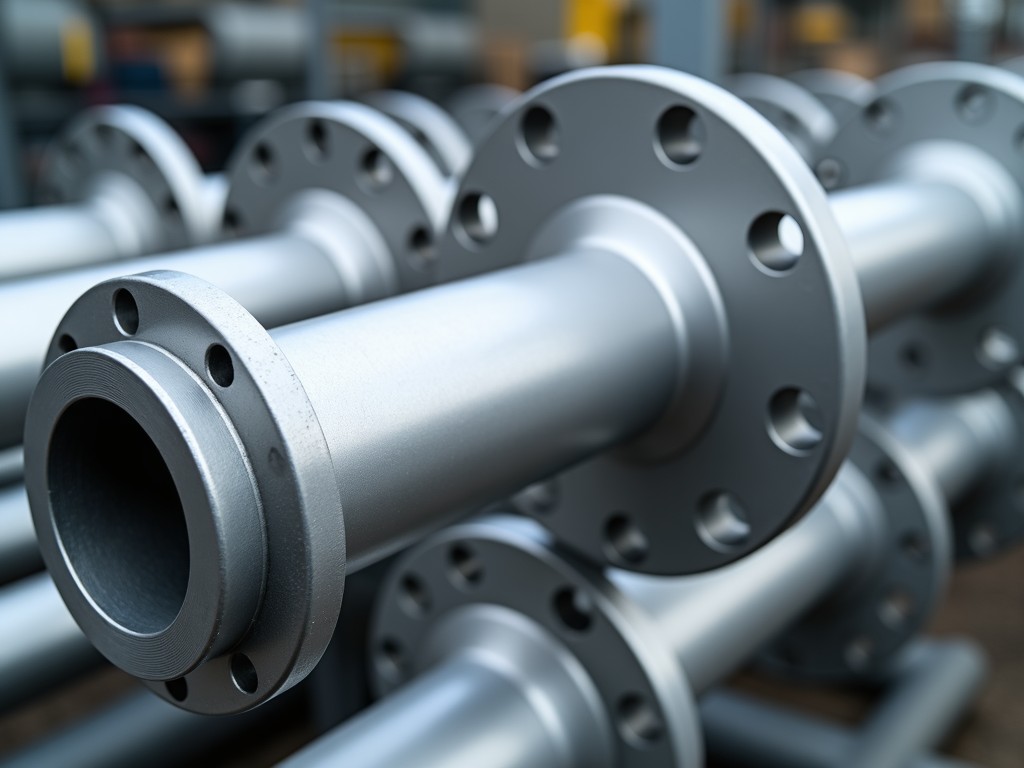
🏭 The Factory-Direct Advantage: Cangzhou Weihuan Pipeline Equipment Co., Ltd.
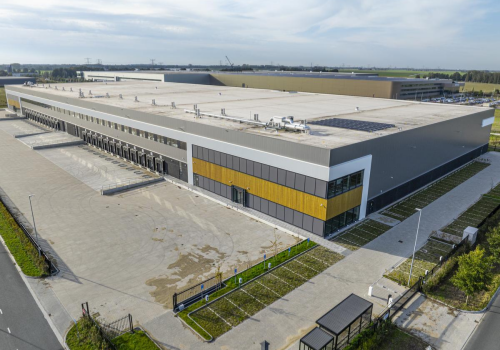
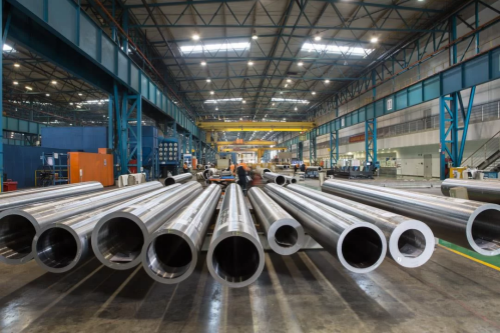
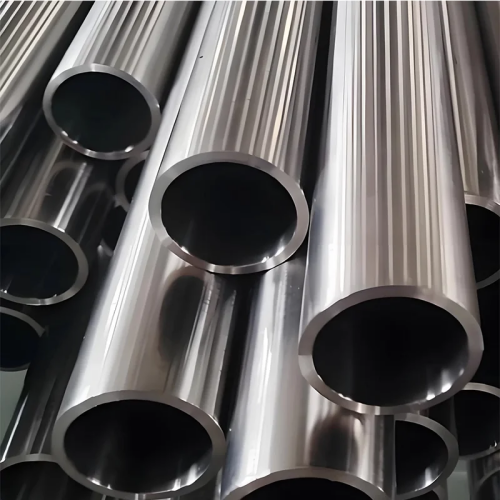
Located in Mengcun Hui Autonomous County, Cangzhou — China’s premier pipe fitting manufacturing cluster — our company operates as a platform-based supply chain management enterprise with dedicated expertise in:
✅ Forged aluminum flanges to ANSI B16.5, DIN EN 1092-1, JIS B2220 (10K/16K/20K)
✅ One-stop pipe & fitting integration: elbows, tees, reducers, steel pipe, MCI fittings
✅ OEM/ODM design — custom bore, face finish, marking, and packaging
✅ High-speed delivery: stock items ship in 7–15 days; custom production 20–35 days
✅ English-speaking sales engineers with cross-timezone procurement support
Our export record spans the USA, Russia, Canada, Kazakhstan, Algeria, the Middle East, South Asia, Africa, and Europe — with consistent customer retention for over 8 years.
🛡️ Quality Assurance & International Certification Compliance
For EU, US, and UK buyers, compliance documentation is as important as the flange itself. Every aluminum weld neck flange we export is backed by the following:

ISO 9001:2015
Quality Management System
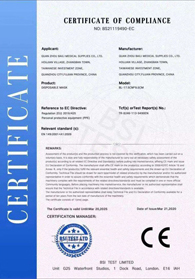
CE / PED
Pressure Equipment Directive
ASME B16.5
Dimensional Conformance
RoHS / REACH
Material Compliance
📋 Standard Documentation Package includes:
Material test certificate: EN 10204 Type 3.1 (or 3.2 with third-party witness)
Chemical composition & mechanical property report
PMI (Positive Material Identification) test results
Hydrostatic pressure test certificate at 1.5× rated pressure
Dimensional inspection report with CMM data
Heat treatment chart (when applicable for T6/T651 condition)
Wooden package export certificate (ISPM 15 compliant)
🤝 Trusted by Industrial Buyers Across 20+ Countries




“We compared three suppliers in China for a 10-inch 6061-T6 aluminum weld neck flange. Cangzhou Weihuan was the only one to provide PMI and hydrostatic test data before payment. Lead time was 25 days, beating the competitor by 12 days.”

Mark D.
Procurement Lead, U.S. Water Treatment EPC
“The factory’s solution approach impressed us. For a 4-inch cryogenic line, they recommended 5083 instead of 6061 and provided comparative tensile data at −196°C. The decision saved us from a potential brittle failure.”

Lena K.
Senior Engineer, German LNG Operator
“Their delivery consistency has improved our project planning. We now stock aluminum weld neck flanges directly from the factory with 6-week rolling forecasts. The freight cost per pallet dropped 30% because of the lighter weight.”

Ahmed R.
Supply Chain Manager, UAE EPC
❓ Frequently Asked Questions — Aluminum Weld Neck Flanges
Q1: What is the difference between an aluminum weld neck flange and a slip-on flange?
A weld neck flange has a tapered hub that is butt-welded to the pipe. This creates a smoother bore transition, higher fatigue resistance, and better stress distribution. Slip-on flanges slide over the pipe and require fillet welds on both sides. For high-pressure, cyclic, or critical service, ASME B31.3 code often mandates the weld neck style.
Q2: Which aluminum alloy is best for welding to 6061-T6 pipe?
For general service, 6061-T6 is the best choice, welded with ER5356 or ER4043 filler depending on anodizing requirements. For marine immersion, 5083-H112 is preferred. We provide filler metal recommendations with every flange shipment.
Q3: What certifications are included in the standard export package?
Each batch ships with the MTC (EN 10204 3.1), PMI report, hydrostatic test certificate, dimensional inspection report, and country-of-origin certificate. Third-party inspection (SGS, BV, TÜV) can be arranged at an additional fee.
Q4: Can you supply DIN / EN 1092-1 or JIS flanges?
Yes. We manufacture aluminum weld neck flanges to DIN EN 1092-1 (Form B1 type), JIS B2220 (5K/10K/16K/20K), and GOST standards. We will also confirm bolt-drilling patterns compatible with your installed piping system.
Q5: What is the minimum order quantity (MOQ)?
For standard ANSI/DIN sizes in 6061-T6, the MOQ is 20 pieces per size. For OEM/ODM custom alloys (5083, 7075) or non-standard bore sizes, the MOQ is 50–100 pieces depending on complexity.
Q6: How do you handle shipping and lead times?
Stock sizes delivered in 7–15 days capacity (depending on port). Custom orders typically require 20–35 days. We can arrange courier, air freight, or sea freight. For sea freight, we use ISPM 15 heat-treated wooden crates with steel strapping for flange protection.
Q7: Do you offer samples for pre-production approval?
Yes. We ship free samples for one or two flange sizes (courier cost borne by buyer). Alternatively, we can provide a pre-production sample set with full dimensional report before mass production.
⭐ Verified Buyer Reviews & Project Results
★★★★★ “37% cost reduction vs. SS316”
“We replaced stainless steel flanges on a food-grade rinse line with 5052-H32 aluminum weld neck flanges. The cost per joint dropped 37%, and the weight reduction halved installation time.”

Carlos J.
Operations Manager, Food Processing Plant — USA
★★★★★ “Perfect match for our aluminum pipe system”
“The factory supplied 6-inch and 8-inch weld neck flanges that fit our 5086 pipe exactly. Weld prep was clean, the bore match was perfect, and X-ray inspection passed on the first try.”

Sven H.
Piping Engineer, Shipbuilding — Norway
★★★★★ “One-stop BOM solution”
“They didn’t just sell flanges — they supplied the complete BOM: elbows, tees, reducers, and steel pipe. That reduced our procurement workload by 60% and ensured perfect schedule matching.”
Priya N.
Supply Chain Lead — UK
★★★★☆ “Verified third-party inspection”
“We brought in TÜV for a random audit of their 10-inch 6061-T6 shipment. All dimensional checks passed ASME B16.5 tolerance. The ISO 9001 documentation matched the physical goods exactly.”
David M.
QA Director — Canada
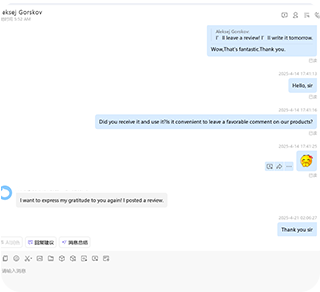
💬 Real-Time Procurement Conversations
Here are direct chat screenshots from our recent buyer interactions — technical questions, quotes, and after-sales support.



About the Author
David Chen — Senior Piping Materials Engineer & Industrial Sourcing Consultant
David has spent 14 years in the piping industry, specializing in non-ferrous metal flange engineering, corrosion analysis, and factory audit procedures. He has personally supervised over 300 container shipments of flanges and fittings to North America, Europe, and the Middle East. He currently leads the export engineering team at Cangzhou Weihuan Pipeline Equipment Co., Ltd.
🚀 Ready to Cut Piping Costs Without Sacrificing Safety?
Request your factory-direct quotation today. Our engineering team typically responds within 24 hours with drawing approvals, alloy recommendations, and a landed-cost estimate.
📧 Email: whxs@weihuantube.com | 📞 Phone: +86 18531701777
🔒 Your project data is kept confidential. Privacy policy compliant with GDPR & international data protection standards.
Cangzhou Weihuan Pipeline Equipment Co., Ltd.
📌 Address: Middle Section of National Highway 338, Mengcun Hui Autonomous County, Cangzhou City, Hebei Province, China
© 2026 Cangzhou Weihuan Pipe Equipment Co., Ltd. All rights reserved. | HTTPS://www.weihuantube.com/contactus/
More from this supplier
Cangzhou Weihuan Pipeline Equipment Co.,Ltd.


