
Image not available

Metals & minerals
pipe reducer dimensions & pipe reducer size chart for pipe | Cheap
<p>The definitive engineering and procurement reference for pipe reducer dimensions and a complete pipe reducer size chart — built for corporate purchasing managers, technical directors, and operations managers who need certified butt-weld reducers at factory-direct pricing, without compromising on quality or lead time.</p>
SupplierCangzhou Weihuan Pipeline Equipment Co.,Ltd.www.weihuantube.com
Source categories
About this product
Product information from the supplier.
Pipe Reducer Dimensions & Size Chart for Pipe: ASME B16.9, DIN & ISO Compliance
The definitive engineering and procurement reference for pipe reducer dimensions and a complete pipe reducer size chart — built for corporate purchasing managers, technical directors, and operations managers who need certified butt-weld reducers at factory-direct pricing, without compromising on quality or lead time.
🏭 Powerful factory in Cangzhou · Exported to 20+ countries · Fully traceable material certificates
📑 Table of Contents
1. Why Reducer Selection Matters2. Pipe Reducer Dimensions: Standards & Tolerances3. Pipe Reducer Size Chart (Full Table)4. Concentric vs. Eccentric Reducers5. Material Grades & Certifications6. Applications & Case Studies7. Factory & Client Proof8. FAQ9. Get Your Custom Quote
⚠️ Why Getting Reducer Dimensions Wrong Costs You Real Money
Every piping engineer has seen it: a batch of reducers arrives, and the large-end outside diameter is 0.8 mm off spec — discovered only during hydrostatic testing. The result? Schedule slippage, rework labor, and a strained client relationship. In the 2026 procurement environment, where project margins are thinner than ever, these errors are not acceptable.
❌ Inconsistent dimensions from multiple suppliers cause field fit-up failures and scrapped pipe spools.
❌ Hidden logistics costs: slow sea freight from unreliable vendors pushes total landed cost up by 15–25%.
❌ Missing material certificates (MTC) fail audits and delay plant commissioning.
❌ Poor quality surfaces (pitting, lamination) lead to premature corrosion and unplanned downtime.
❌ Non-standard tolerances make reducers incompatible with your existing pipe schedules and welding procedures.
📌 Industry context: According to pipe fitting engineering principles, a reducer coupling “performs the same function but for pipes of two different sizes, featuring a larger female thread on one end and a smaller one on the other.” When sourcing globally, verifying exact pipe reducer dimensions before you buy is the single highest-ROI step you can take.
See also: 2025 Guide: 7 Key Facts About Malleable Pipe Fittings
→ Request a Pre-Shipment Inspection Checklist
✅ The Cangzhou Weihuan Solution: Precision, Traceability, Factory-Direct
As a platform-based supply chain enterprise, Cangzhou Weihuan Pipeline Equipment Co., Ltd. delivers one-stop pipe and fitting solutions. Our reducers are manufactured to the world’s strictest standards, giving your project:
🔧 Full Dimensional Compliance
ASME B16.9, DIN 2605, EN 10253, and ISO 15590-2 compliant — every batch is gauged with calibrated overlays.
📋 Material Traceability
Mill Test Certificates (MTC) per EN 10204 3.1 / 3.2, heat numbers, and chemical analysis on every heat.
⚡ High-Speed Delivery
Machine stock for popular sizes; 3-week production cycle for custom dimensions; sea/air hybrid shipping.
💰 Factory-Direct Pricing
No trading-house markup. Direct-from-mill economics save our clients 15–30% versus Western distributors.
Note on material selection: A 2025 paper in Cureus Journal of Engineering — “Performance Material Selection in Rigid Flange Coupling Systems” — demonstrates that optimizing alloy choice against operating conditions can reduce both over-specification waste and in-service failures. We apply this same logic to reducer material selection. Read the study framework.
📐 Technical Specification Table (Crawlable Data)
| Parameter | Available Range |
|---|---|
| Nominal Size | 1/2" – 48" (DN15 – DN1200) |
| Wall Thickness | SCH 5S, 10S, 20, 40, 80, 160, XXS |
| Manufacturing Standards | ASME B16.9, ASME B16.25, MSS SP-43, DIN 2605, EN 10253-4, ISO 15590-2 |
| Material Grades | Carbon: ASTM A234 WPB, WPC, A105; Stainless: A403 WP304/304L, WP316/316L; Alloy: WP5, WP9, WP11, WP22 |
| End Connection | Butt-weld (BE), Socket-weld, Threaded (NPT/BSPT) |
| Surface Finish | Anti-rust oil, black paint, hot-dip galvanized, sandblasting, passivation |
| Pressure Rating | ASME Class 150 – 2500 (depending on schedule & material) |
🔍 Need a dimension that is not in the table? Our team can reverse-engineer or replicate any legacy or OEM/ODM reducer design. Contact us for a free fit-up assessment.
📏 Pipe Reducer Dimensions: Standards, Tolerances & Terminology
Before consulting any pipe reducer size chart, you need a clear understanding of the dimensional standards and terms that govern these fittings. Under ASME B16.9, a butt-weld reducer is defined by three critical dimensions:
1️⃣ Large-End Outside Diameter (D1)
Matches the larger pipe OD. Governs weld fit-up onto the upstream pipe end.
2️⃣ Small-End Outside Diameter (D2)
Matches the smaller pipe OD. Must be concentric (or eccentric) aligned per your piping layout.
3️⃣ Overall Length (L)
End-to-end length along the centerline axis. ASME B16.9 governs the minimum length for each size.
Dimensional Tolerances per ASME B16.9
| NPS Range | Outside Diameter Tolerance (D1 & D2) | Overall Length Tolerance (L) |
|---|---|---|
| 1/2 – 2.1/2 | +1.6 mm / −0.8 mm | ±2 mm |
| 3 – 3.1/2 | ±1.6 mm | ±2 mm |
| 4 – 10 | ±1.6 mm | ±2 mm |
| 12 – 24 | +2.4 mm / −1.6 mm | ±3 mm |
| 26 – 48 | +3.2 mm / −1.6 mm | ±3 mm |
📐 Why this matters: A mismatch at the weld joint — even ±1 mm — can cause high-low misalignment, poor weld penetration, and rejection during your client’s QA audit. Cangzhou Weihuan verifies these tolerances on 100% of reducers before shipment.
📊 Pipe Reducer Size Chart: Standard Concentric Reducer Dimensions
The table below gives the most commonly requested pipe reducer size chart data for concentric butt-weld reducers per ASME B16.9. Sizes are arranged as LargeEnd × SmallEnd.
| NPS (Inch) | Large End OD (mm) | Small End OD (mm) | Length L (mm) | Common Schedule |
|---|---|---|---|---|
| 2 × 1 | 60.3 | 33.4 | 76 | SCH 40 / 80 |
| 3 × 1.5 | 88.9 | 48.3 | 89 | SCH 40 |
| 4 × 2 | 114.3 | 60.3 | 102 | SCH 40 / 80 |
| 6 × 3 | 168.3 | 88.9 | 127 | SCH 40 |
| 8 × 4 | 219.1 | 114.3 | 152 | SCH 40 / 80 |
| 10 × 6 | 273.0 | 168.3 | 178 | SCH 40 |
| 12 × 8 | 323.8 | 219.1 | 203 | SCH 40 |
| 16 × 12 | 406.4 | 323.8 | 254 | SCH 20 / 40 |
| 20 × 16 | 508.0 | 406.4 | 305 | SCH 20 |
| 24 × 20 | 609.6 | 508.0 | 356 | SCH 20 |
📏 Eccentric Reducer Dimensions (Selected Sizes)
| NPS (Inch) | Large End OD (mm) | Small End OD (mm) | Length L (mm) | Offset Type |
|---|---|---|---|---|
| 3 × 2 | 88.9 | 60.3 | 89 | Flat Bottom |
| 6 × 4 | 168.3 | 114.3 | 127 | Flat Bottom / Flat Top |
| 8 × 6 | 219.1 | 168.3 | 152 | Flat Bottom |
| 12 × 10 | 323.8 | 273.0 | 203 | Flat Top (Hydrocarbon Spec) |
💡 Pro tip: Always specify whether you need concentric or eccentric reducers when ordering. For horizontal liquid lines, an eccentric reducer (flat side up) prevents air pockets; for horizontal steam lines, flat side down allows condensate drainage. This is an often-missed detail in purchase orders.
🔄 Concentric vs. Eccentric Reducers: Choosing the Right Configuration
⭕ Concentric Reducer
Centerlines of both ends remain on the same axis.
Ideal for vertical piping risers and pump suction/discharge where symmetrical flow is required.
Preserves smooth, even flow behavior; minimizes turbulence at the transition.
Common in water treatment, food & beverage, and pharmaceutical lines.
📏 Eccentric Reducer
Centerlines are offset; one side is continuous/straight.
Used in horizontal piping to prevent air or vapor accumulation (flat top) or to allow drainage (flat bottom).
Critical in hydrocarbon and steam service where trapped liquid or gas creates safety hazards.
Mandatory on many API 610 pump suction lines.
📌 Engineering reference: Research on sustained stress indices (SSI) at tee connections — published in the International Journal of Pressure Vessels and Piping — demonstrates that local stress intensification at pipe transitions must be evaluated systematically per ASME B31 codes. View the ScienceDirect study. Reducers, like tees, create discontinuity stresses; our technical team can provide stress analysis support using the R6 FAD reference-stress method for your critical service conditions.
🧪 Material Grades, Certifications & Compliance
Material specifications in the pipe reducer size chart mean nothing without correct chemistry and heat treatment. Cangzhou Weihuan stocks and manufactures reducers in the following grades:
ASTM A234 WPBASTM A420 WPL6 (LTCS)A403 WP304/304LA403 WP316/316LA234 WP5 / WP9 / WP11 / WP22Duplex S31803 / S32205Inconel / Monel (on request)
Certificates & Compliance Badges

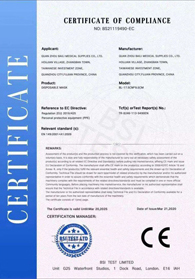


Certification ready on request: EN 10204 3.1 / 3.2 MTC, PMI test reports, heat treatment charts, hydrostatic test certificates, and NACE MR0175 compliance documents.
🔬 Performance material selection perspective:
The 2025 Cureus study on rigid flange coupling systems emphasizes that over-specifying exotic alloys for benign services drives unnecessary cost, while under-specifying leads to premature failure. We apply the same decision matrix to reducers. Ask us for a material optimization recommendation based on your actual operating pressure, temperature, and medium — we will help you avoid paying for alloy content you do not need.
🏗️ Applications & Real-World Case Studies
Pipe reducers are used across industries where flow diameter must change without compromising pressure integrity. Our clients span:
⛽ Oil & Gas — upstream and midstream pipelines, wellhead flow lines
🏭 Chemical & Petrochemical — process piping, reactor discharge lines
💧 Water Treatment — municipal supply, desalination plants
⚡ Power Generation — steam and feedwater systems
🏢 HVAC / Plumbing — commercial building risers and distribution
📦 Cross-border E-commerce — OEM kits and replacement fittings for distributors
🇺🇸 Case 1: US Chemical Plant
Challenge: A Texas-based chemical plant was paying 40% above mill cost for imported stainless reducers from a European middleman.
Solution: We supplied A403 WP316L concentric reducers (2"×1" through 10"×6") with full MTC, PMI, and hydrostatic test reports. Direct factory container loading.
Result: 32% cost reduction and 100% fit-up acceptance.
🇨🇦 Case 2: Canadian Oil Sands
Challenge: An Edmonton contractor needed 48"×36" carbon steel eccentric reducers (flat bottom) for a produced-water line. Local stock: 8-week lead time.
Solution: Our Cangzhou factory produced and shipped within 3 weeks, using hot-forging + CNC machining to achieve the required flat-bottom configuration.
Result: Emergency turnaround fulfilled; client has since placed 4 repeat orders.
📍 Technical Deep-Dive: Stress Behavior in Pipe Fittings
When an external load is applied to a pipe bend or reducer transition, the cross-section tends to deform both in and out of its plane. As documented in the engineering literature, Elbow Stress Indices Using Finite Element Analysis, this shell-type behaviour, driven by curved geometry, accounts for greater flexibility but also introduces local stress concentration.
Similarly, the R6 Reference Stress Method paper shows how J-based failure assessment diagrams (FAD) underpin fracture assessment for defective pipe components. We share these same references with our clients to help them scope critical-service reducers correctly — especially for high-pressure hydrogen and sour service (NACE MR0175).
🏭 Factory Strength & Client Trust
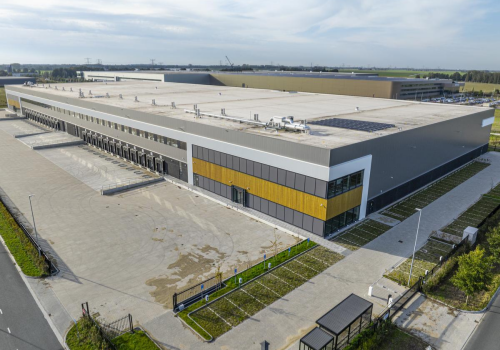
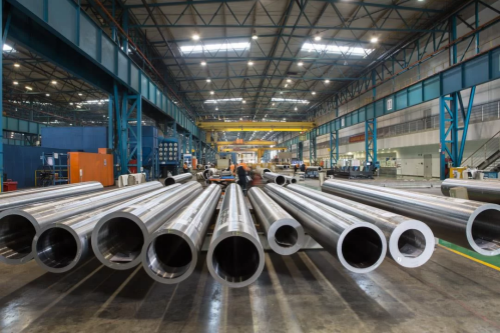
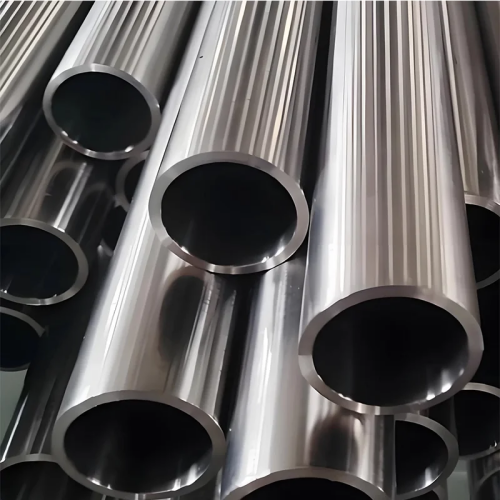
Our manufacturing and QC floors in Mengcun Hui Autonomous County, Cangzhou, Hebei, China.
💼 Brands & Partners We Serve





Representative partners and served brands from our 20+ country export network.
❓ Frequently Asked Questions
Q1: What are the standard pipe reducer dimensions?
Standard dimensions follow ASME B16.9 for butt-weld reducers. The key parameters are large-end outside diameter, small-end outside diameter, and overall length. Our pipe reducer size chart above lists the most common combinations. For example, a 4"×2" reducer has an OD of 114.3 mm on the large end, 60.3 mm on the small end, and is 102 mm long.
Q2: How do I read a pipe reducer size chart?
Find the row where the large-end size and small-end size intersect. The chart columns show large-end OD, small-end OD, and length. Always verify whether the chart is ASME B16.9 (inch-based) or DIN 2605 (metric-based). For custom sizes, use our free technical consultation service.
Q3: What is the difference between concentric and eccentric reducers?
A concentric reducer maintains a common centerline, distributing flow symmetrically — ideal for vertical lines. An eccentric reducer has an offset centerline, with either a flat top (to avoid air pockets in liquid lines) or a flat bottom (to promote condensate drainage in steam lines). For horizontal pump suction, eccentric flat-top is often specified per API 610.
Q4: Which materials are available for reducers?
We offer carbon steel (ASTM A234 WPB), low-temperature carbon steel (A420 WPL6), stainless steel (A403 304/304L, 316/316L), alloy steels (WP5, WP9, WP11, WP22), duplex, and nickel alloys on request. Each order includes full material traceability and MTC.
Q5: What is the MOQ and lead time?
MOQ is just 20 kg for standard carbon steel sizes. For seamless reducers with stock material, basic sizes ship within 7–15 days. Custom alloys and large diameters (above 24") typically need 3–5 weeks for production plus shipping. Contact us to check current stock availability.
Q6: How do you handle shipping costs?
We ship via FOB/CIF/CFR to all major ports. For urgent US/Europe orders, we use rail-sea or air freight options. Full freight quotes are provided with your proforma invoice — no hidden charges, ever. Our logistics desk in Cangzhou coordinates consolidated exports to reduce your per-unit freight cost.
Q7: Can you produce OEM/ODM reducers with my brand?
Yes. We provide OEM/ODM services including custom stamping, painting, laser marking, and packaging with your logo. For distributors and e-commerce sellers, we can pre-package kits with bagging and multi-language labeling, making your warehouse ready for direct retail dispatch.
⭐ Real Reviews from Reducer Buyers Around the World

David M.
Procurement Manager, Texas
⭐⭐⭐⭐⭐
“We compared their pipe reducer dimensions against our engineering specs. Every single piece matched. The MTC came with correct heat numbers, and our welding subcontractor had zero fit-up rejections across the whole batch of 400+ reducers.”

Klaus R.
Technical Director, Germany
⭐⭐⭐⭐⭐
“The factory-direct price was 27% lower than our previous European distributor. But the real win was delivery: they shipped a partial air-freight order so we could keep our shutdown schedule. This is how B2B sourcing should work.”

Sarah T.
Operations Manager, Alberta
⭐⭐⭐⭐⭐
“We ordered eccentric reducers for a produced-water skid. The flat-bottom tolerance was within 0.5 mm, and the large-end OD matched our existing SCH 40 pipe perfectly. This is the second year we've sourced from Weihuan, and the consistency is impressive.”
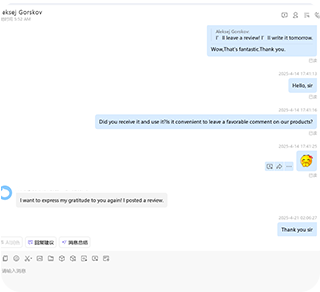


Live WhatsApp conversations with clients during RFQ and order fulfillment.

About the Author
Jason Wang (王效书) — Senior Piping Engineer at Cangzhou Weihuan Pipeline Equipment Co., Ltd. With 15 years of experience in pipe fitting manufacturing, QC, and international supply chain management, Jason has personally overseen over 600 export shipments of reducers, elbows, tees, and flanges to the USA, EU, Canada, and the Middle East. He is a certified welder-inspector and regularly contributes technical guidance to clients on ASME B31.3 and EN 13480 piping applications.
🚀 Ready to Save 15–30% on Factory-Direct Pipe Reducers?
Send us your Bill of Materials (BOM) today and receive a free dimensional verification within 24 hours. We'll also cross-check your pipe reducer size chart requirements and flag any potential fit-up issues before you order.
📞 Phone / WhatsApp: +86 18531701777
🏢 Middle section of National Highway 338, Mengcun Hui Autonomous County, Cangzhou City, Hebei Province, China
🔗 www.weihuantube.com/contactus
🔒 Your RFQ and project data are strictly confidential. We respect applicable trade compliance regulations and will never share your information with third parties. Free samples for qualified projects. Risk-free trial order available.
More from this supplier
Cangzhou Weihuan Pipeline Equipment Co.,Ltd.


