
Image not available
Household goods
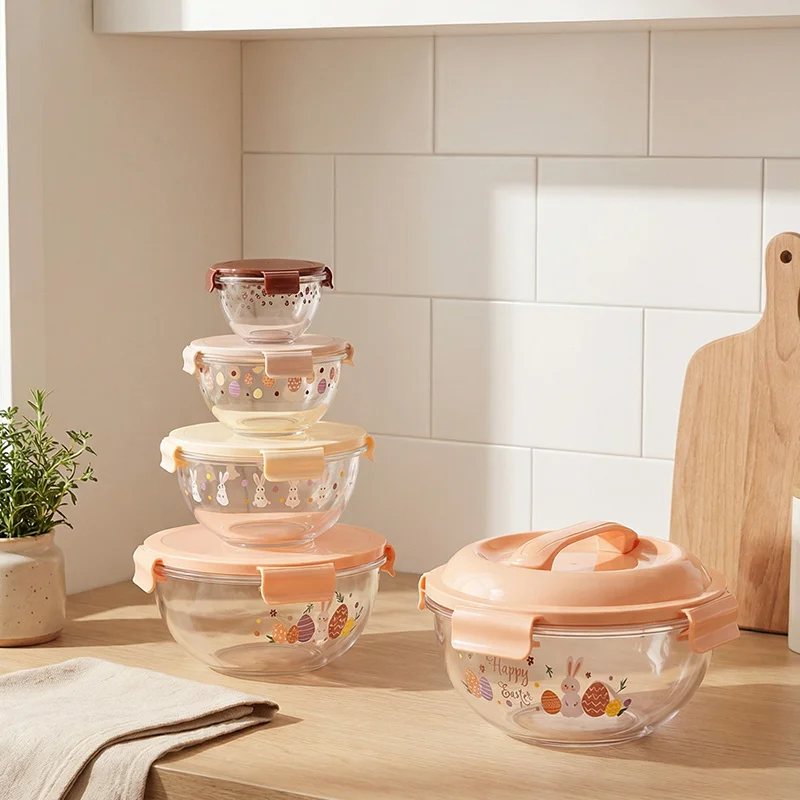
IKOO Borosilicate Glass Mixing Bowl Set Stackable with Lids
<p></p><table class="tables data" width="100%"><tbody><tr class="firstRow"><td class="p_name">Brand Name:</td><td>IKOO GLASS</td></tr><!-- 最小起单量 --><tr><td>MOQ:</td><td>3000 PCS</td></tr><!-- 付款方式--><tr><td>Payment Terms:<span id="_baidu_bookmark_start_61" style="display: none; line-height: 0px;"></span></td><td>L/C,T/T,Paypal</td></tr><!-- 包装 --><tr><td colspan=&qu
SupplierIKOO GLASSwww.ikoo-glass.com
Source categories
About this product
Product information from the supplier.


| Name | High Borosilicate Glass Mixing Bowl with PP Lock Lid |
| Material | Borosilicate glass * PP lid with silicone gasket |
| Customization | Colors, logo, packaging |
| Size | 180ml, 500ml, 1000ml, 2000ml, 3500ml |
| Temperature Resistance | -40°C to 560°C |
| Certificated | BSCI, ISO, FDA, LFGB, DGCCRF |
● Durable Bowls That Nest With Ease: When it comes to glass mixing bowls, you want them sturdy, thick, clear, and space-saving, right? If so, you’ll probably love these five strong mixing bowls with lids. They neatly nest with a handle on top for easy compact storage!
● 5pc Glass Mixing Bowls With Lids Set: The big bowl is 11 in wide and 5.9 in tall, while the 2qt bowl is 9 x 3.9 in. Two med / small glass bowls include 7.5x3.5in, 5.9x2.8in and finally the small glass bowl is 4.5 x 2.4 in. Each one nests into the other with the lids on, so nothing gets lost in your cupboard.
● All Temperature Glass Mixing Bowl Set: Made from Borosilicate Glass (aka, space shuttle glass), your clear bowls are robust and love extremes! They’re Dishwasher Safe, Oven Safe to 1040DegF, Freezer Safe to minus 104DegF, and microwave-safe containers (*NOT THE LIDS). Both lids and bowls are fridge safe.
● Airtight Lids For Fresher Food: The airtight silicone seal and secure clips mean you can use them for a food prep bowl or leftovers without odors and air getting in or out! And the large bowl lid with handle locks securely so you can grab your nested set all at once without fumbling around.


Glass Mixing Bowls with Lids Manufacturer Solutions for Multi-Channel Buyers
For retailers and importers, a mixing bowl set is more than a basic kitchen tool. It sits at the intersection of food preparation, baking, storage, serving, and meal prep, which means the product has to perform well across several use cases. When evaluating a glass mixing bowls with lids manufacturer, B2B buyers should look at how well the supplier controls the full system: bowl dimensions, lid fit, sealing, nesting, packaging, and consistency across multiple sizes.
The IKOO set is made from high borosilicate glass with PP lock lids and silicone gaskets. It is offered in five capacities from 180ml to 3500ml, allowing the set to cover small prep tasks, sauces, ingredients, batters, salads, and larger mixing jobs. For category managers, that size progression makes the product easier to merchandise as a complete solution rather than as a single bowl. It also creates options for five-piece sets, smaller starter sets, or open-stock extensions.
Nesting is an important commercial feature because large bowl sets can consume significant shelf and cabinet space. A well-designed nesting structure makes the product easier to store in a consumer kitchen and can also improve the package footprint for retail. Buyers should verify that the bowls sit securely inside one another and that lids can be organized without creating excessive bulk. Small improvements in nesting can reduce carton volume and make the product more attractive for e-commerce fulfillment.
Heat resistance and food-contact performance are other key purchasing considerations. IKOO lists a temperature resistance range of -40°C to 560°C for the glass and certifications including BSCI, ISO, FDA, LFGB, and DGCCRF. Procurement teams should confirm which reports apply to the exact configuration and market. The important point for a B2B program is not simply that the material is borosilicate, but that the finished set can be supported by consistent production records and clear usage instructions.
Build a Distinct Kitchenware Range with Glass Mixing Bowls with Lids
Glass mixing bowls with lids give private-label brands several ways to differentiate without changing the fundamental function of the product. IKOO lists customization for colors, logo, and packaging, which allows buyers to shape the retail presentation around their own brand. A minimalist homeware label might prefer neutral lid colors and simple cartons, while a lifestyle brand may use coordinated seasonal colors and more gift-oriented packaging.
Logo strategy should be considered together with the sales channel. For a premium set, a subtle mark on packaging or the lid can feel more refined than a large printed logo on the glass. For mass retail, stronger brand visibility may be useful. Buyers should decide early where logos, compliance marks, capacity information, barcodes, and care instructions will appear so that packaging artwork and product decoration are approved at the same time.
Set configuration can also become part of the private-label strategy. The five available capacities allow buyers to create a full family or select the sizes most relevant to their customer base. Baking-focused retailers may emphasize medium and large bowls, while meal-prep or compact-kitchen brands may prefer smaller nesting sets. Because the product includes lids, the range can be positioned not only as mixing bowls but also as prep-and-store kitchenware, increasing the number of selling points available to the retailer.
For wholesale programs, the supplier's ability to repeat color, gasket fit, clip performance, and glass dimensions is just as important as customization. Buyers should keep an approved master sample and a documented specification for each size. That makes inspection easier and reduces subjective arguments over what is acceptable. It also helps when a successful set is expanded into new colors or additional packaging formats.
Bulk Sourcing Standards to Expect from a Glass Mixing Bowl Set Factory
A glass mixing bowl set factory should be evaluated on both product quality and operational fit. Start with the physical sample: check clarity, rim smoothness, base stability, lid alignment, gasket seating, clip operation, and how easily each bowl nests. Then test the complete user workflow. Can the consumer move from mixing to refrigerator storage without transferring food? Are the lids easy to identify by size? Does the largest bowl remain comfortable to handle when full?
Next, review packaging performance. A five-piece glass set is relatively heavy, so internal protection and carton strength are important. Buyers should assess how the bowls are separated, whether lids are protected from deformation, and whether the pack can withstand distribution through the intended channel. Parcel networks and warehouse club distribution can place different stresses on packaging, so a one-size-fits-all carton may not be optimal.
Commercial terms also matter. The current IKOO product page lists a 3000-piece MOQ. Buyers planning multiple colors or set configurations should clarify whether the MOQ applies per size, per color, or per finished assortment. They should also confirm sample procedures, production lead time, artwork deadlines, inspection timing, and how spare parts or replacement lids are handled if required by the retail program.
For importers, distributors, supermarkets, e-commerce sellers, and private-label kitchenware brands, the strongest mixing bowl programs combine useful size progression with reliable nesting and practical lids. When those features are supported by stable manufacturing, clear specifications, and packaging designed for the sales channel, the product can work as a long-term kitchen category instead of a short promotional item. IKOO can support B2B discussions around set configuration, customization, samples, packaging, and bulk production requirements.
Why Choose a Borosilicate Bowl with Lid for Mixing, Meal Prep and Food Storage?
A borosilicate bowl with lid can serve several roles in the kitchen, making it an attractive category for retailers, importers, kitchenware distributors, and private-label brands looking to offer products with broader everyday utility. Instead of selling a conventional mixing bowl designed only for food preparation, buyers can build a product proposition around mixing, prepping, serving, and short-term food storage.
The key advantage is the combination of a glass bowl and a fitted lid. Consumers can prepare ingredients in the bowl, cover the contents, and place the same vessel in the refrigerator without transferring food into a separate storage container. This prep-to-store workflow can be especially relevant for baking ingredients, salads, marinades, dough preparation, leftovers, and advance meal preparation.
Material selection is another important consideration. High borosilicate glass is widely used for kitchenware where temperature resistance and versatility are important. For B2B buyers, however, material claims should be evaluated together with the finished-product specification, lid design, sealing system, capacity range, and intended market requirements.
IKOO's borosilicate bowl with lid combines high-quality borosilicate glass bowls with PP locking lids and silicone gaskets. Multiple capacities from 180ml to 3500ml allow buyers to develop coordinated sets for different food-preparation tasks.
For private-label programs, the commercial opportunity extends beyond the bowl itself. Lid colors, logo presentation, set configuration, packaging style, and retail positioning can all influence how the product fits a particular channel.
Importers and brands evaluating a new glass mixing bowl program can therefore start by defining their target consumer, preferred set configuration, sales channel, and packaging concept before requesting samples or a customized quotation.
How Do Stacking Glass Bowls with Lids Save Space for Retail and Everyday Kitchens?
Space efficiency has become an important product consideration in modern kitchenware, particularly when several bowl sizes are sold together. Stacking glass bowls with lids address this issue by combining multiple capacities within a nesting system that occupies substantially less cabinet space than individually stored bowls.
For consumers, the concept is straightforward: smaller bowls fit inside larger ones when they are not being used. A coordinated set can therefore provide several preparation capacities without requiring the storage footprint normally associated with multiple standalone bowls. This makes the format relevant to apartments, compact kitchens, organized pantries, and consumers who prefer multifunctional kitchen products.
For B2B buyers, however, nesting should be considered as more than a consumer convenience feature.
A well-planned glass mixing bowl set with lids can also influence packaging design, shelf presentation, e-commerce fulfillment, and perceived product value. Importers and retailers should evaluate how efficiently the complete set nests, how the lids are arranged, whether components remain protected during transportation, and whether consumers can easily identify the correct lid for each bowl.
IKOO offers a five-size high borosilicate glass bowl system ranging from 180ml to 3500ml. This progression gives buyers flexibility when developing full sets or selected-size assortments for different channels.
Set architecture can also become part of product differentiation. A retailer may prefer a compact starter set, while a kitchenware brand may want a broader family covering ingredient preparation, baking, salad preparation, serving, and storage.
For OEM and private-label sourcing, buyers should therefore consider the entire system—bowl sizes, lid organization, nesting efficiency, packaging dimensions, color strategy, and retail positioning—rather than evaluating each bowl as an isolated SKU.
What Should B2B Buyers Look for in a Borosilicate Mixing Bowl Set?
Choosing a borosilicate mixing bowl for a retail or private-label program involves more than comparing glass thickness or unit price. Importers, distributors, supermarkets, e-commerce brands, and kitchenware buyers should evaluate the complete product system and how it will perform throughout sourcing, transportation, merchandising, and consumer use.
Start with the bowl itself. Check glass clarity, rim finishing, base stability, dimensional consistency, and how comfortably the bowl can be handled during mixing. If several capacities form one set, buyers should also examine whether the size progression makes sense for actual kitchen tasks and whether the bowls nest efficiently.
Next, evaluate the lids. A glass mixing bowl set with lids creates additional use cases, but it also introduces more components that require consistency. Lid fit, gasket seating, locking operation, color consistency, and repeated opening and closing should therefore be included in sample evaluation.
Set configuration is equally important commercially. Smaller bowls may work for sauces, ingredients, or preparation, while medium and large capacities can support baking, salads, mixing, and larger food-preparation tasks. A logical capacity progression makes the set easier for consumers to understand and easier for retailers to merchandise.
Packaging should be evaluated according to the intended sales channel. A product prepared for parcel-based e-commerce may have different protection requirements from one designed primarily for physical retail.
Finally, B2B buyers should confirm which specifications, test reports, certifications, customization options, and commercial terms apply to the exact SKU being sourced.
A successful borosilicate mixing bowl program is therefore not defined by material alone. It combines practical sizes, consistent lids, efficient nesting, appropriate packaging, clear specifications, and a product configuration suited to the target channel.
Looking for a Genicook Borosilicate Glass Mixing Bowl Set Alternative for Private Label?
Buyers searching for a Genicook borosilicate glass mixing bowl set may be researching more than one particular retail product. In many cases, the underlying sourcing requirement is a multifunctional glass bowl collection that combines preparation, storage, nesting, lids, and a coordinated retail appearance.
For importers, distributors, and private-label kitchenware brands, the more useful question is therefore: what product architecture should a comparable mixing-and-storage bowl program include?
Start with material and function. Borosilicate glass can support a versatile kitchen positioning, while fitted lids expand the product from a traditional preparation bowl into a prep-and-store solution. A nesting format can further strengthen the proposition by helping consumers organize several capacities within a smaller cabinet footprint.
Capacity structure should then be matched to the intended customer. IKOO's current high borosilicate glass mixing bowl program includes 180ml, 500ml, 1000ml, 2000ml, and 3500ml options. This range can support multiple preparation tasks and gives B2B buyers room to discuss different set configurations.
Private-label differentiation should also be considered early in the sourcing process. Rather than reproducing another brand's presentation, buyers can build their own identity through lid colors, logo treatment, packaging design, assortment strategy, and channel-specific positioning.
This is particularly important for brands entering competitive kitchenware categories. A successful glass mixing bowl set with lids should have a clear reason to exist within the buyer's assortment instead of becoming another visually similar product.
If you are sourcing a Genicook-style borosilicate mixing and storage bowl concept for your own brand, define the target sizes, set configuration, color direction, packaging requirements, and sales channel first. These requirements can then be used to evaluate samples and develop a more differentiated private-label program.
More from this supplier
IKOO GLASS


