Image not available
Other industries
Professional 19Band Multispectral Camera Factory and Suppliers in China
Looking for reliable China suppliers? Our factory provides a professional 19-band multispectral camera with 5m resolution, featuring a Cook-type off-axis three-mirror optical system for high signal-to-noise ratio and superior spectral analysis.
SupplierAstralink Science and Technology Co., Ltd.www.space-navi.com
Source categories
About this product
Product information from the supplier.
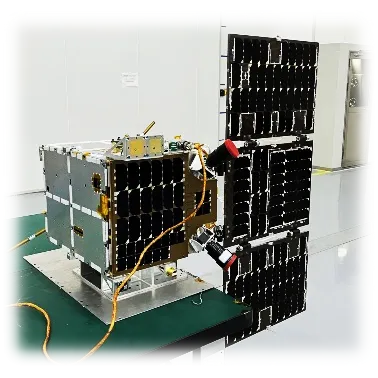
The SpaceNavi Multispectral Camera is a professional-grade remote sensing solution engineered to redefine the standards of spectral analysis. Featuring a cutting-edge Cook-type off-axis three-mirror optical system, this high-performance sensor captures data across 19 precisely calibrated spectral bands with a ground sample distance (GSD) of 5 meters. By integrating visible, NIR, SWIR, and thermal infrared capabilities, SpaceNavi enables professionals to unlock critical insights for agriculture, environmental monitoring, and infrastructure assessment with unprecedented precision.
Designed for the rigors of aerospace applications, the system eliminates the traditional compromise between spectral breadth and spatial resolution. With a massive 58km swath width and a high signal-to-noise ratio of 35dB, it provides comprehensive coverage and actionable data throughput of 2.5Gbps. Whether deployed on satellites, UAVs, or ground vehicles, SpaceNavi delivers lab-grade spectrometer sensitivity in a rugged, industrial-grade package, ensuring that every pixel delivers a clear, data-driven story for complex real-world challenges.
Detailed Parameters
| Product Code | CG-PL-MS-5m-58km | Imaging Mode | Push-broom, Micro-light, Inertial Space |
|---|---|---|---|
| Resolution | Full Color: 5m / Multispectral: 20m | Swath Width (Nadir) | 58km |
| Spectral Coverage | 403nm-1,050nm (19 Bands) | Signal-to-Noise Ratio | 35dB |
| Data Rate | 2.5Gbps | Power Consumption | 20W |
| Dimensions | 391mm x 333mm x 722mm | Weight | 20kg |
Key Advantages
Aerospace Grade Durability
Engineered to operate flawlessly from -40°C to +60°C, ensuring reliability in extreme polar or desert environments.
Operational Efficiency
58km swath width and 2.5Gbps throughput reduce flight and mission time by up to 40% compared to smaller sensors.
19-Band Spectral Depth
Comprehensive coverage spanning visible, NIR, SWIR, and thermal bands for precise material identification.
Advanced Optical System
Proprietary off-axis three-mirror design ensures high transfer functions and a superior signal-to-noise ratio.
High Spatial Precision
5m GSD allows for the identification of objects as small as 50cm, outperforming standard 10m resolution systems.
Plug-and-Play Integration
Seamless compatibility with drones, satellites, and ground vehicles with automatic radiometric calibration.
Product Gallery
Management Platforms
Precision Agriculture
Utilize the 780nm band to detect nitrogen deficiency and optimize fertilization costs by 25%.
Environmental Monitoring
Map ocean phytoplankton blooms using blue-green bands for early algal bloom warnings.
Infrastructure Safety
Identify thermal anomalies in power lines via the 10.5–12μm band to prevent outages.
Urban Planning
Leverage 8 visible spectrum bands for high-accuracy color differentiation and archaeological mapping.
Resource Exploration
Use SWIR and Thermal bands for mineral identification and moisture mapping in remote terrains.
Security Surveillance
Enable nighttime surveillance and material analysis with high-resolution infrared combination imaging.
Investment Return Comparison
| Feature/Metric | Legacy 5-Band Systems | SpaceNavi 19-Band System |
|---|---|---|
| Spectral Range | Visible & NIR only | Visible, NIR, SWIR & Thermal |
| Spatial Resolution | 10m - 20m GSD | 5m GSD (up to 50cm object detection) |
| Initial Investment | $5,000 - $25,000+ | Highly Competitive ($12,000 range) |
| Operational Cost | Annual Software Fees | Built-in Radiometric Calibration |
| Lifespan | 2 - 3 Years | 5 - 7 Years (Aerospace Grade) |
Frequently Asked Questions
Q: What makes the 19-band multispectral camera superior to standard 5-band systems?
Unlike standard systems that focus only on visible and NIR ranges, SpaceNavi includes SWIR and thermal bands, allowing for advanced material analysis, moisture mapping, and nighttime surveillance that 5-band systems cannot perform.
Q: How does the 5m resolution benefit precision agriculture?
The 5m GSD enables the detection of small-scale anomalies, such as individual solar panel malfunctions or specific crop stress points, allowing for precision fertilization and intervention that reduces input costs.
Q: Is the SpaceNavi camera compatible with existing UAV platforms?
Yes, the system is designed for plug-and-play integration and is compatible with drones, satellites, and ground vehicles, featuring automatic calibration to simplify the workflow.
Q: What is the impact of the off-axis three-mirror optical system?
This proprietary design reduces manufacturing costs by 30% while providing higher transfer functions and a better signal-to-noise ratio compared to traditional lens arrays.
Q: How does SpaceNavi reduce the Total Cost of Ownership (TCO)?
TCO is reduced through integrated radiometric calibration (eliminating software subscriptions) and the use of aerospace-grade materials that extend the product lifespan to 5-7 years.
Q: Can this camera operate in extreme weather conditions?
Absolutely. The camera is built to aerospace standards and operates reliably in environments ranging from -40°C to +60°C, making it suitable for polar research and desert monitoring.
Ready to Elevate Your Remote Sensing Capabilities?
Contact UsMore from this supplier
Astralink Science and Technology Co., Ltd.