Image not available

Other industries
High Precision Spacecraft Flywheels China Suppliers and Factory
Leading China factory and suppliers of high-precision spacecraft flywheels for satellite attitude control. Propellant-free, reliable, and efficient solutions for deep space exploration.
SupplierAstralink Science and Technology Co., Ltd.www.space-navi.com
Source categories
About this product
Product information from the supplier.
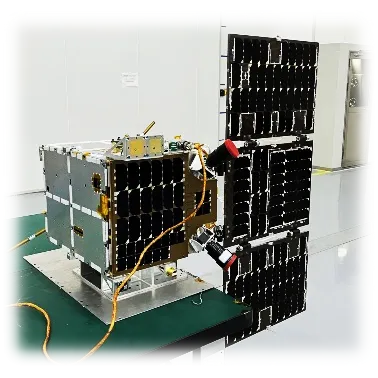
Our high-precision Spacecraft Flywheels are engineered for sophisticated attitude control systems in satellites and aerospace vehicles. By storing and releasing angular momentum through high-speed rotation, these devices provide an exceptionally stable and precise method for controlling a spacecraft's orientation in the vacuum of space.
Designed for reliability and longevity, these flywheel systems utilize high-inertia wheels driven by advanced electric motors. By accelerating or decelerating the wheel to generate torque, they eliminate the need for consumable propellants, making them a cost-effective and sustainable solution for geostationary satellites, scientific missions, and deep space exploration.
Detailed Parameters
| Product Codes | CG-DJ-FW-3mN·m / 1.4mN·m / 15mN·m / 150mN·m | Working Voltage | 12±1V / 9V-12.5V / 12V±1.2V / 30V±3V |
|---|---|---|---|
| Envelope Size | Up to 252mm × 125mm (Max) | Weight | 0.83kg to 9±0.3kg (Depending on model) |
| Angular Momentum | ≥0.1Nms to 15Nms (Model specific) | Output Torque | ≥1.4mNm to 0.15Nm |
| Communication | RS422 / CAN Interface | Operating Precision | ≤±0.2 rpm to ≤±5 rpm |
| Power Consumption | Steady state: ≤1.8W to ≤5W | Supply Cycle | 3 months standard lead time |
Key Advantages
Propellant-Free
Operates without consumable fuel, significantly extending mission lifespan and reducing launch mass.
High Reliability
Maintenance-free design with no moving fluids, ensuring stability in harsh space environments.
Precision Control
Achieves extreme accuracy in spacecraft orientation through precise rotational energy management.
Versatile Modes
Supports multiple working modes including Standby, Speed, and Current modes for flexible operations.
Optimized Power
Low steady-state power consumption ensures efficient energy use of the satellite power subsystem.
Industry Standard
Compatible with RS422 and CAN interfaces for seamless integration into satellite data systems.
Product Gallery
Management Platforms
Momentum Storage
High-efficiency kinetic energy storage using high-inertia wheels.
Torque Modulation
Dynamic acceleration and deceleration for precise attitude adjustment.
Real-time Telemetry
Continuous monitoring of RPM and power via RS422/CAN interfaces.
Stability Control
Advanced speed and current modes to maintain satellite equilibrium.
Thermal Management
Designed to operate within strict temperature ranges of deep space.
System Integration
Compatible with Power Sub Systems and TT&C product suites.
Investment Return Comparison
| Comparison Metric | Reaction Control (Fuel) | Flywheel System |
|---|---|---|
| Consumables | High Propellant Need | Zero Propellant |
| Operational Life | Limited by Fuel Volume | Extremely Long/Maintenance-Free |
| Precision | Coarse Adjustment | High-Precision Modulation |
| Complexity | Plumbing & Valves Required | Purely Electromechanical |
| Long-term Cost | High Refueling/Replacement | Low Operational Expenditure |
Frequently Asked Questions
Q: What is the primary function of a flywheel in satellite attitude control?
The flywheel stores rotational energy (angular momentum). By changing its spin speed, it creates a torque that rotates the satellite in the opposite direction, allowing for precise orientation control.
Q: Why are flywheels preferred over traditional thrusters?
Unlike thrusters, flywheels do not require consumable propellant, which reduces the satellite's launch weight and extends the mission's operational lifetime indefinitely.
Q: Which communication interfaces are supported by these flywheels?
Our flywheels support industry-standard RS422 and CAN communication interfaces to ensure seamless data exchange with the spacecraft's main computer.
Q: Can these flywheels operate in deep space environments?
Yes, they are specifically designed for scientific missions and deep space exploration where long-term reliability and maintenance-free operation are critical.
Q: What are the different operating modes available?
Depending on the model, they support Standby Mode, Speed Mode, and Current Mode to provide flexibility in how torque and momentum are managed.
Q: What is the typical lead time for ordering these components?
The standard supply cycle for our flywheel product line is approximately 3 months.
Ready to Optimize Your Satellite Attitude Control System?
Contact UsMore from this supplier
Astralink Science and Technology Co., Ltd.