Image not available
Other industries
High Precision Star Sensor China Factory and Leading Suppliers for Satellite Navigation
Looking for reliable Star Sensor China suppliers? Our factory provides high-precision optical instruments with 5 arcsec accuracy and 8Hz update rates for autonomous satellite navigation and deep space missions.
SupplierAstralink Science and Technology Co., Ltd.www.space-navi.com
Source categories
About this product
Product information from the supplier.
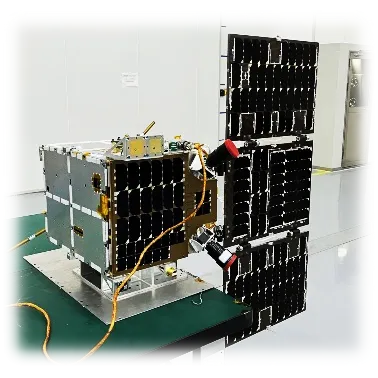
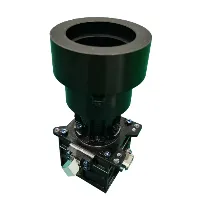
The Star Sensor is a state-of-the-art optical precision instrument engineered for high-fidelity satellite navigation and attitude control systems. By capturing the luminosity of distant stars and processing the light patterns through advanced onboard algorithms, it determines the exact orientation and spatial position of a spacecraft relative to the celestial sphere with exceptional accuracy.
Designed to withstand the rigorous environment of deep space, this sensor integrates high-performance optical detectors and a comprehensive star catalog to ensure autonomous and stable positioning. It is the ideal solution for earth observation satellites and deep space exploration missions where minimal dependence on external references and maximum reliability are critical for mission success.
Detailed Parameters
| Product Code | CG-DJ-SS-5″ | Angular Accuracy | 5″ |
|---|---|---|---|
| Quaternion Update Rate | 8Hz | Power Consumption | ≤2.5W |
| Weight | ≤0.4kg | Supply Cycle | 12 months |
| Application | Satellite Navigation | Operation Mode | Autonomous Positioning |
| Environmental Tolerance | High Radiation | Temperature Range | Extreme Space Grade |
Key Advantages
Space-Grade Durability
Engineered to operate reliably under high radiation and extreme temperature fluctuations typical of the space environment.
High Update Frequency
A quaternion update rate of 8Hz ensures real-time attitude tracking for dynamic spacecraft maneuvers.
Extreme Precision
Delivers an angular accuracy of 5″, providing the stability required for high-resolution Earth observation.
Advanced Algorithms
Utilizes sophisticated star pattern recognition and catalog matching for autonomous orientation determination.
Low Power Footprint
With consumption ≤2.5W, it maximizes the power budget of the satellite's power sub-system.
Lightweight Design
Weighting ≤0.4kg, it reduces the overall launch mass, lowering mission deployment costs.
Product Gallery
Management Platforms
Component Integration
Seamlessly fits into various satellite components and spacecraft bus architectures.
Attitude Control
Integrates with power controllers and ADCS for precision spacecraft pointing.
Real-time Monitoring
Continuous data streaming for health monitoring and orientation validation.
Autonomous Nav
Reduces reliance on ground-station TT&C for orientation updates.
System Redundancy
Designed for multi-sensor arrays to ensure fail-safe navigation operations.
Catalog Management
Updatable star catalogs to support wide-range deep space exploration.
Investment Return Comparison
| Performance Metric | Standard Sensors | Our Star Sensor |
|---|---|---|
| Angular Accuracy | 10″ - 20″ | 5″ High Precision |
| Power Efficiency | 5W - 10W | ≤2.5W Ultra-Low |
| Weight Penalty | 0.8kg - 1.5kg | ≤0.4kg Lightweight |
| Update Frequency | 1Hz - 4Hz | 8Hz High-Speed |
| Autonomy Level | Ground Dependent | Fully Autonomous |
Frequently Asked Questions
Q: How does the Star Sensor ensure accuracy in deep space?
It utilizes high-precision optical detectors to capture stellar light patterns and compares them against an extensive onboard star catalog using advanced pattern-matching algorithms.
Q: Can this sensor withstand high radiation levels in orbit?
Yes, the device is specifically designed for the aerospace industry, using radiation-hardened materials and components to ensure long-term operational stability.
Q: What is the significance of the 8Hz quaternion update rate?
An 8Hz update rate allows the satellite's attitude control system to make rapid, precise adjustments, which is critical for stable imaging and precise antenna pointing.
Q: How does it integrate with the Power Sub-System?
With a power consumption of ≤2.5W, it is highly efficient and integrates easily into the satellite's power distribution network without straining the battery packs.
Q: Is this sensor suitable for UAV applications as well?
While optimized for satellites, its high precision and lightweight design make it adaptable for high-altitude long-endurance (HALE) UAVs requiring autonomous celestial navigation.
Q: What is the typical lead time for procurement?
The standard supply cycle for the Star Sensor is 12 months, accounting for rigorous aerospace quality testing and calibration.
Ready to Enhance Your Satellite's Navigation Precision?
Contact UsMore from this supplier
Astralink Science and Technology Co., Ltd.