
Image not available
Chemicals
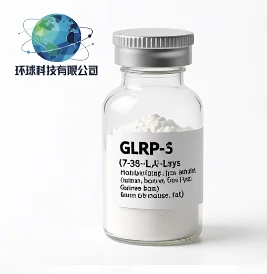
GLP-1 (7-36)-Lys(biotinyl) amide (human, bovine, guinea pig, mouse, rat)
<p>GLP-1 (7-36)-Lys(biotinyl) amide is a universal biotinylated research reagent that includes the major active form of Glucagon-Like Peptide 1 (the 7-36 fragment) with a C-terminal lysine residue conjugated to biotin. This product is offered as a species-crossreactive conjugate, featuring sequences compatible with human, bovine, guinea pig, mouse, and rat GLP-1 receptors due to high sequence homology in this region…
SupplierGlobal Technology Co., Ltd.www.hqtechtirz.com
Source categories
About this product
Product information from the supplier.
TECHNICAL SPECIFICATIONS
| Item | Specification |
|---|---|
| Product Name | GLP-1 (7-36)-Lys(biotinyl) amide (human, bovine, guinea pig, mouse, rat) |
| CAS NO. | / |
| Appearance | White to off-white lyophilized powder |
| Molecular Formula | C165H252N44O48S |
| Molecular Weight | 3652.18g/mol |
| Purity (RP-HPLC) | ≥ 95.0% |
| Solubility | Soluble in water (≥ 5 mg/mL), dilute acetic acid, or DMSO; also soluble in phosphate-buffered saline (PBS) |
| Endotoxin | ≤1.0 EU/mg |
| Biological Activity | Retains native GLP-1 receptor agonist activity; EC₅₀ typically ≤ 0.3 nM in cAMP accumulation assays; biotin label enables detection via streptavidin conjugates |
| Storage Conditions | Store at -20°C to -80°C in a dry, dark, desiccated environment. |
| Stock Location | Stock in USA |
| MOQ | 1g |
1.MECHANISM OF ACTION
This biotinylated conjugate functions as a high-affinity, full agonist for the GLP-1 Receptor (GLP-1R) across multiple species. It binds specifically to the extracellular domain of GLP-1R, a Class B G-protein coupled receptor, and activates canonical downstream signaling. Receptor engagement stimulates Gs-protein coupling, activating adenylate cyclase and elevating intracellular cyclic AMP (cAMP). This triggers protein kinase A (PKA) and Epac2 pathways, leading to glucose-dependent insulin secretion in beta cells, suppression of glucagon release, slowed gastric emptying, and enhanced satiety signaling.
2.PRODUCT INDICATIONS
Multi-Species Receptor Studies: Ideal for comparative GLP-1R research across human, rodent (mouse, rat, guinea pig), and bovine models using a single, cross-reactive reagent.
Receptor Visualization & Trafficking: For immunohistochemistry (IHC), immunofluorescence (IF), and live-cell imaging of GLP-1R localization, expression, and internalization using streptavidin-fluorophore conjugates.
Affinity Purification & Proteomics: Isolating native GLP-1R complexes from tissue lysates or cell lines via streptavidin bead pull-down for mass spectrometry or Western blot analysis.
Biosensor & Binding Assay Development: Immobilizing the peptide on streptavidin-coated surfaces (SPR chips, ELISA plates, BLI sensors) for kinetic studies, ligand screening, and diagnostic assay development.
Flow Cytometry: Quantifying cell surface GLP-1R expression on live cells using streptavidin-conjugated fluorochromes.
High-Throughput Screening (HTS): Serving as a universal tagged ligand in screening campaigns for GLP-1R agonists, antagonists, or allosteric modulators across different species.
3.CLINICAL EFFICACY OF PRODUCT
Research & Diagnostic Tool Efficacy: Its efficacy is defined by its performance in the laboratory—specifically, its ability to bind GLP-1R with high affinity across species and enable sensitive detection, quantification, and isolation of the receptor in complex biological samples.
Enabling Translational Research: By facilitating detailed studies of GLP-1R biology in preclinical animal models (mouse, rat, guinea pig) and human systems, this tool contributes to the mechanistic understanding that underpins GLP-1-based therapies.
Supporting Drug Discovery: It is invaluable in characterizing lead compounds, performing receptor occupancy studies, and validating assay systems during the development of GLP-1R-targeting drugs like semaglutide, liraglutide, and tirzepatide.
Clinical Correlation: The GLP-1 pathway itself is the target of highly efficacious FDA-approved drugs for type 2 diabetes and obesity. This reagent helps bridge preclinical findings to human biology, but the conjugate itself is not a therapeutic.
4.DELIVERY & SHIPPING
We specialize in global logistics for various cosmetic peptides. Your order will be handled with the utmost care, ensuring safe, reliable, and intact delivery.
Professional and Secure Packaging
Each bottle of peptide is protected with a special packaging solution to ensure stability and integrity during transportation.
We can also customize packaging according to customer needs.
Shipping Methods
Main Method: International Air Freight
We primarily use DHL, FedEx, UPS, and TNT because of their global reliability, speed, and advanced tracking systems. Air freight ensures the fastest transit time and minimizes the impact of environmental factors on the product.

More from this supplier
Global Technology Co., Ltd.


