
Image not available

Chemicals
Bradykinin 17 CAS 23815874 China Suppliers High Purity Peptide Factory
High-purity Bradykinin 1-7 CAS 23815-87-4 from leading China suppliers. Our factory provides 99% pure synthetic heptapeptides for cardiovascular and renal research, serving as a critical metabolic marker and analytical standard for pharmacological assays.
SupplierGlobal Technology Co., Ltd.www.hqtechtirz.com
Source categories
About this product
Product information from the supplier.
Bradykinin (1-7), CAS NO.23815-87-4, is a high-purity synthetic heptapeptide serving as a critical metabolite within the kallikrein-kinin system. Specifically engineered for advanced biochemical research, this peptide plays a pivotal role in modulating vascular tone and inflammatory responses, acting as a selective substrate that influences the activity of kininases and carboxypeptidases in the heart, kidneys, and vascular endothelium.
Designed for precision, our Bradykinin (1-7) is an essential tool for pharmacologists and researchers studying the effects of ACE inhibitors and the molecular signaling of vasoactive kinins. With a purity level of ≥99.0%, it provides a reliable standard for quantitative mass spectrometry and HPLC analyses, enabling the accurate exploration of peptide metabolism and cardiovascular pathology in preclinical models.
Detailed Parameters
| Product Name | Bradykinin (1-7) | CAS NO. | 23815-87-4 |
|---|---|---|---|
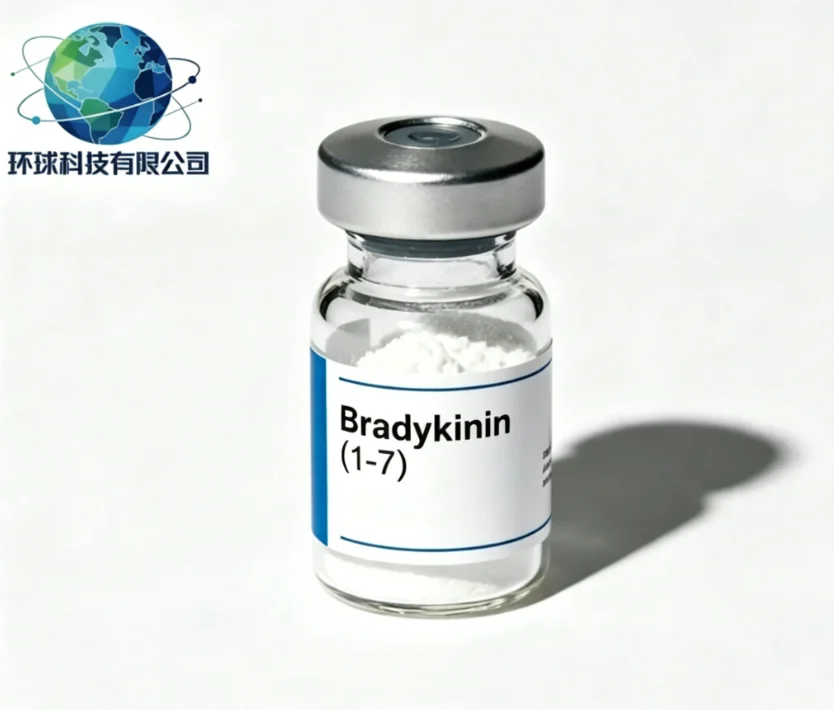
| Appearance | White to off-white lyophilized powder | Molecular Formula | C35H52N10O9 |
| Molecular Weight | 756.87 g/mol | Purity (RP-HPLC) | ≥99.0% |
| Solubility | Water or dilute acetic acid | Endotoxin | ≤1.0 EU/mg |
| Storage | -20°C, dry and dark | Stock Location | USA |
Key Advantages
Ultra-High Purity
Guaranteed ≥99.0% purity via RP-HPLC, ensuring consistent and reproducible results in sensitive biochemical assays.
Metabolic Precision
Acts as a precise marker for the kallikrein-kinin system, ideal for monitoring enzymatic cleavage kinetics.
GMP-Compliant
Produced using GMP-compliant systems with full batch traceability and rigorous quality control processes.
Analytical Standard
Serves as a primary external calibrant for MALDI-TOF MS and HPLC quantitative analysis.
Selective Activity
Exhibits selective agonistic activity toward B1 receptors, modulating inflammation without intense cascades.
Full Certification
Each batch is accompanied by a COA, HPLC report, and MS chromatograms for complete transparency.
Product Gallery
Management Platforms
Quality Control
Rigorous screening from raw material procurement to final peptide synthesis and purification.
Production Scale
Flexible capacity ranging from milligram laboratory scale to ton-level industrial manufacturing.
Batch Traceability
Comprehensive documentation ensuring every vial is traceable to its original production lot.
Global Logistics
Specialized cold-chain shipping via DHL, FedEx, and UPS to maintain peptide stability.
Regulatory Compliance
Strict adherence to international trade standards and pharmaceutical quality requirements.
R&D Collaboration
Partnerships with renowned universities to optimize peptide sequences and stability.
Investment Return Comparison
| Research Indicator | Standard Grade Peptide | Our Premium Bradykinin (1-7) |
|---|---|---|
| Purity Rate | <95% | ≥99.0% (HPLC Verified) |
| Batch Consistency | Variable | High Stability (CoA Provided) |
| Endotoxin Level | Unspecified | ≤1.0 EU/mg (Ultra Low) |
| Analytical Utility | General Use | Calibration Standard Grade |
| Delivery Speed | Standard Shipping | Expedited USA Stock Shipping |
Frequently Asked Questions
Q: What is the primary application of Bradykinin (1-7) in pharmaceutical research?
It is primarily used as a metabolic marker for the kallikrein-kinin system to evaluate the kinetics of kininases and as a standard for quantifying peptides in biological fluids using HPLC or Mass Spectrometry.
Q: How should Bradykinin (1-7) be stored to maintain its stability?
The peptide should be stored at -20°C in a dry, dark, and well-sealed container. It is crucial to avoid repeated freeze-thaw cycles to prevent degradation.
Q: Is this product suitable for clinical use in humans?
No, Bradykinin (1-7) is strictly designated for in vitro laboratory research and biochemical assay development. It is not intended for therapeutic or clinical use.
Q: What certifications accompany the shipment of the peptide?
Each batch comes with a comprehensive Certificate of Analysis (COA), an RP-HPLC purity report, and MS chromatograms to ensure quality and traceability.
Q: How does Bradykinin (1-7) differ from full-length Bradykinin?
Bradykinin (1-7) has a reduced affinity for classical B1 and B2 receptors compared to the full-length peptide, allowing for more nuanced modulation of vascular tone without triggering an intense pro-inflammatory cascade.
Q: Can this product be used to study ACE inhibitor efficacy?
Yes, it is an excellent tool for exploring how ACE inhibitors alter the tissue ratios of kinin metabolites, helping researchers understand cardiovascular and renal pathology models.
Ready to Advance Your Peptide Research?
Contact UsMore from this supplier
Global Technology Co., Ltd.


